
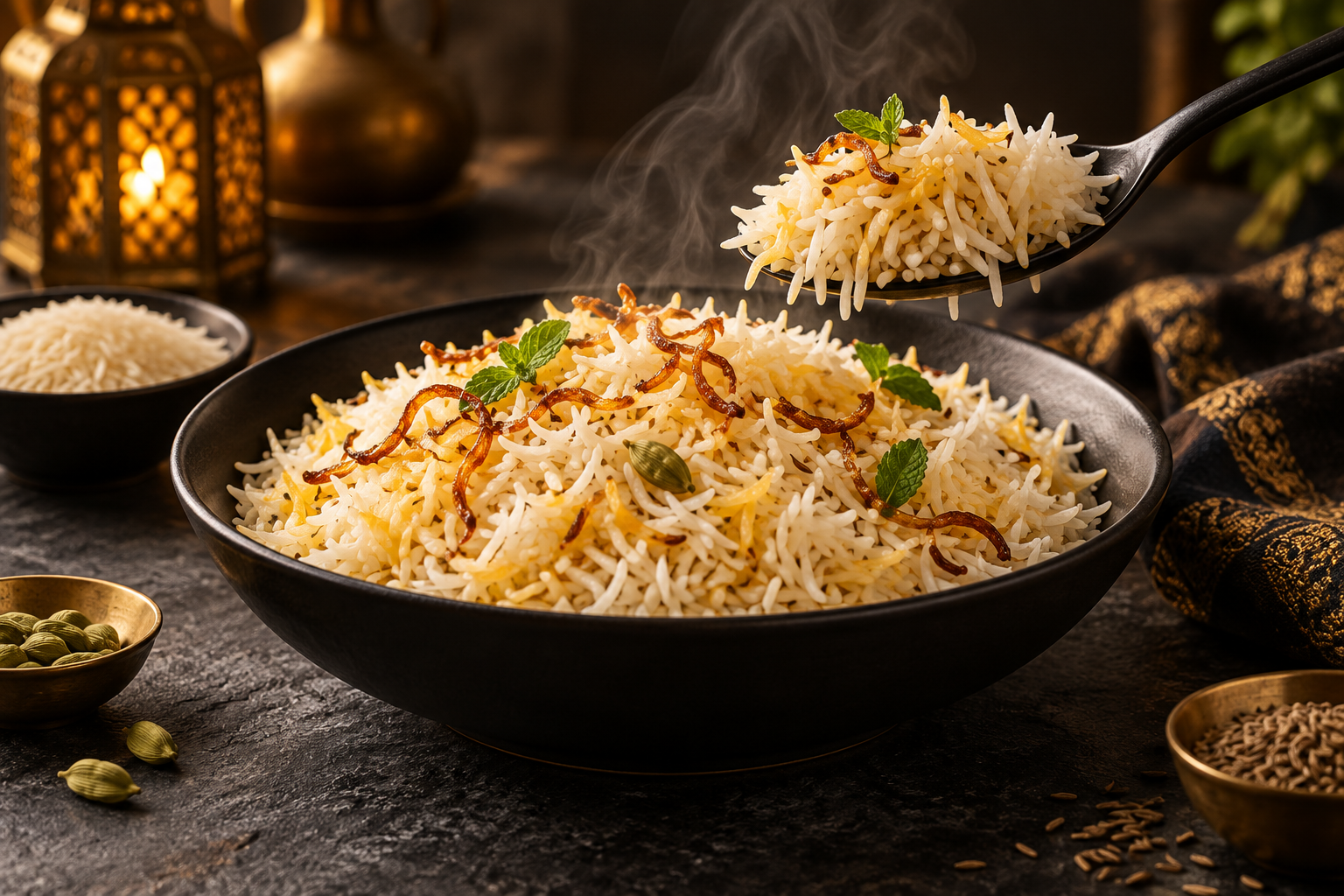
There is something welcoming about lifting the lid from a pot of fragrant rice. Warm steam rises, spices fill the kitchen, and delicate basmati grains promise a meal worth gathering around.
But rice can also test a cook’s patience. Sometimes it becomes sticky, sometimes the bottom catches, and sometimes the grains soften before the rest of the dish is ready.
The good news is that fluffy basmati depends on a few thoughtful habits. Whether you are preparing biryani, yakhni pulao or a simple vegetable rice, these small details can make a noticeable difference.
Start with the Right Rice
Choose long grain basmati for its fragrance and delicate texture. Aged basmati is often a good choice for biryani and pulao because it tends to hold its shape well during cooking.
Different brands behave differently. When you find one that works well, note the soaking time, cooking method and amount of liquid you used. That little kitchen record is more useful than expecting every packet to cook exactly alike.
Rinse Gently Before Cooking
Place the rice in a bowl, cover it with cool water and gently move the grains with your fingers. Drain and repeat until the water becomes noticeably clearer.
Rinsing removes some of the loose surface starch that can encourage the grains to stick together. Avoid rubbing or squeezing the rice, as this can break the delicate grains.
Give It Time to Soak
Many basmati recipes benefit from a short soak, often around 20 to 30 minutes. Check your packet and recipe, as some varieties need a different approach.
Soaking helps the rice hydrate before it meets the heat. Drain it thoroughly afterwards, and remember that soaked rice may cook faster than rice taken straight from the packet.
Biryani and Pulao Need Different Approaches
For many biryani recipes, the rice is partly cooked in a separate pot of boiling water before being drained and layered with the prepared meat or vegetables. It then finishes cooking during the covered steaming stage.
The important point is to leave enough firmness for that final stage. If the rice is already completely soft before layering, it can become overcooked during steaming.
Pulao usually cooks the rice directly in a measured amount of seasoned stock or water. Here, liquid control matters. Follow a recipe suited to your rice and cooking method rather than relying on one universal ratio.
Let the Spices Support the Rice
Cumin, cardamom, cloves and cinnamon can bring wonderful fragrance to a pot of rice. Use them thoughtfully so that their aroma supports the dish without overwhelming it.
For yakhni pulao, a flavorful stock helps carry seasoning through the grains. For vegetable pulao, gently cooked onions and balanced spices provide a welcoming foundation.
Taste and adjust the cooking liquid before adding the rice, following your recipe’s seasoning guidance.
Resist the Urge to Keep Stirring
Once an absorption-style rice dish is covered and simmering, avoid repeatedly opening the lid or stirring the pot.
Frequent stirring can break the grains, while lifting the lid releases steam needed for cooking. Keep the heat gentle and allow the covered pot to do its work.
Rest Before Serving
When the rice has finished cooking, turn off the heat and leave it covered for about 10 minutes, or as your recipe directs.
Then gently loosen the grains with a fork or a broad spoon. Lift and separate rather than pressing or vigorously mixing. This final moment of patience helps preserve the texture you worked to create.
Bring Something Fragrant to the Table
Good rice does not need to be complicated. Careful rinsing, suitable liquid, gentle heat and a little patience can turn everyday ingredients into something memorable.
At Kini Cuisine, rice is an important part of our Pakistani and Indian menu, from chicken biryani to comforting pulao dishes made for sharing.
Planning a family meal or gathering in Princeton or Central New Jersey? Explore our Biryanis & Rice menu and contact Kini Cuisine on WhatsApp at 609-423-5150 to discuss your order.
Leave a Reply